
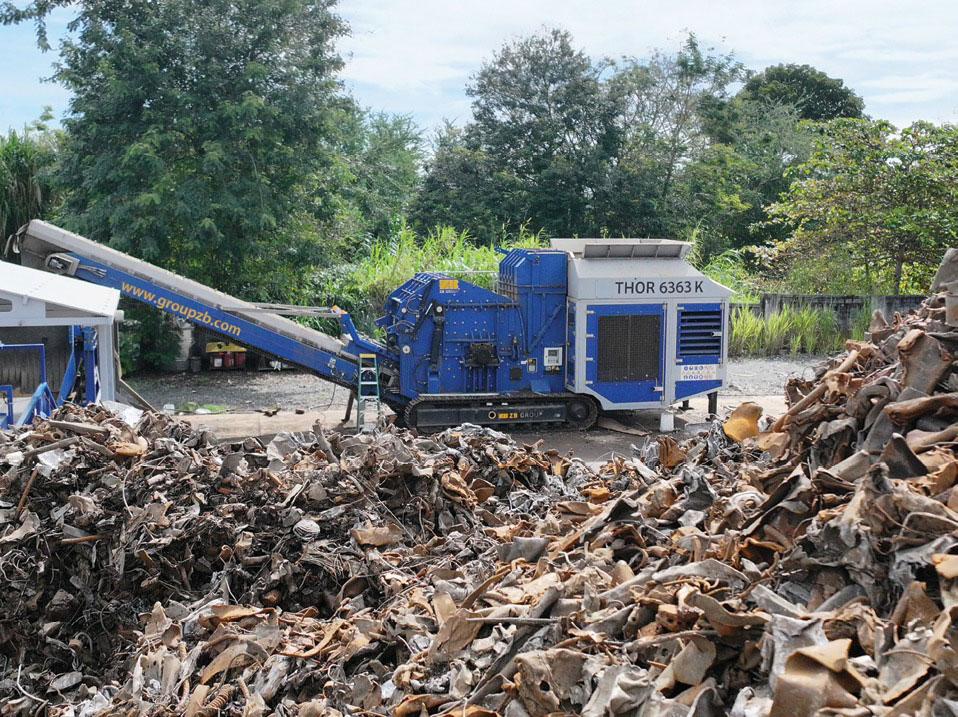
The gap between preshred and what mills want
ZB saw that twin-shaft output fell short of the density and cleanliness steel mills demand, so it engineered a mobile hammermill designed to work right behind those machines.
“In 2012, we identified a significant gap between the output of twin-shaft shredders and the density and cleanliness steel mills demanded. That’s when we engineered the THOR 6363 K to bridge that gap and provide a versatile, low-cost solution for producing value-added material.”
— Lander Arrieta, CEO of ZB Group
More output from a smaller engine
- 20–25 gross tons per hour of preshredded material.
- 755 BHP diesel engine powering the rotor and all auxiliary systems; higher-power and electric options available.
- Can be run by the crane operator feeding the machine.
- Patented ZBrain software coordinates feeding, rotor, engine, outfeed and separation.
The numbers: operating cost vs. added value
- Typical operating cost of $15–25 per gross ton.
- Upgrading HMS No. 2 to shred can add $40–60 per gross ton in most markets.
- Uniform output makes nonferrous separation and zorba recovery easier.
- 30–50% ROI in most markets.
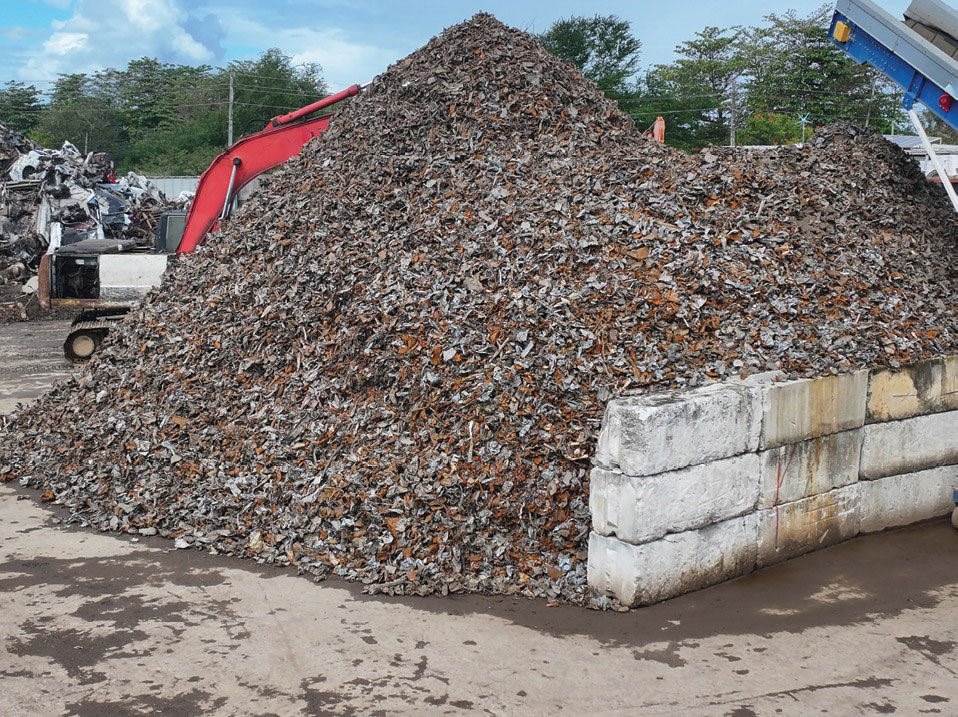
Shredded scrap from the THOR 6363 K (1616 K): uniform, dense and mill-ready.
Ready to run, with local support
The THOR 6363 K arrives fully assembled and is ready to operate once unloaded from the lowboy. A concrete slab is recommended, but compacted ground or gravel will do. Its modular design lets you swap the infeed, feed rollers or power unit as needs change, and it holds a high residual value.
“Once we arrived in the U.S. back in 2013, it became clear that the North American market demanded local support. That’s why, in 2015, we decided to open a postservice subsidiary, ZB North America, in Atlanta.”
— Lander Arrieta